
How Prayer Changes Us Before It Changes Our Situation
Before God moves the mountain, He tends to move the heart standing in front of it. A look at what happens in the waiting.
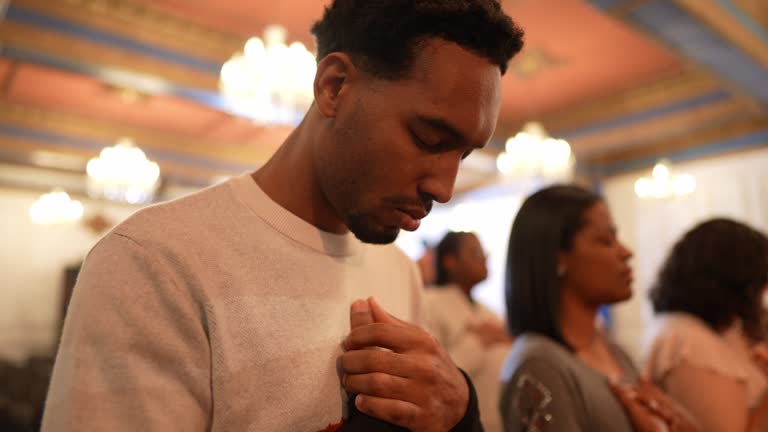
I used to think prayer was a transaction. I brought God a request, He brought back an answer, and the quality of my prayer life was measured by how quickly the two connected. Ask, receive, move on. It took years, and a lot of unanswered prayers, before I understood that this was never really the point.
The mountain doesn't move first. The heart does. Somewhere between the first time you bring a burden to God and the moment He actually addresses it, something happens to you that wouldn't have happened any other way. You slow down. You stop pretending you have it handled. You say the quiet part out loud, even if only to yourself and to Him.
Peace before resolution
Philippians 4:6-7 doesn't promise that anxious situations will resolve the moment we pray about them. It promises peace: a peace that transcends understanding, that guards our hearts and minds. Read carefully, and you'll notice the peace comes before the resolution, not after. It's not a reward for getting the answer right. It's what happens in the room while you're waiting.
That changes how we should judge whether prayer is "working." If the only measure is whether the circumstance shifted, many of our prayers will look like failures. But if we ask whether we are steadier, more honest, less alone than we were before we started praying, the answer is often yes. Long before the situation moves.
Hannah's face changed first
One of the clearest pictures of this is in 1 Samuel 1. Hannah had prayed for a child for years, carrying grief and the daily sting of being mocked for it. One day at the temple she poured everything out before God, so intensely that the priest thought she was drunk.
Then comes a small detail that's easy to miss. After she prayed, the text says she went her way, ate something, and her face was no longer sad.
Nothing had changed yet. She wasn't pregnant. She had no confirmation beyond a priest's blessing. But she had given the burden to God, and she walked out different from the woman who walked in. The son came later. The change in Hannah came first.
The waiting is not empty
This is the part nobody tells you when you first start praying seriously: the waiting is not empty space between the request and the answer. It's where the actual work gets done, in you and not in your circumstances. Abraham waited twenty-five years for Isaac. David waited over a decade between being anointed king and actually sitting on the throne. In both cases, the waiting years weren't wasted. They were the training ground.
David's waiting years were spent in caves, on the run, leading a ragged band of men who were in debt and discontented. It was there he learned to lead, to trust God under pressure, and to refuse to take by force what God had promised to give. Many of the psalms we still pray today were written in that season. The throne would have come either way. The king who sat on it was shaped by the wait.
Sometimes the answer is a different you
There are times when the circumstance doesn't change at all, and the transformation is the answer.
Paul asked God three times to remove what he called a thorn in his flesh. The answer, in 2 Corinthians 12, wasn't removal. It was "My grace is sufficient for you, for my power is made perfect in weakness." Paul walked away still carrying the thorn, but carrying it as a different man, one who could say he would boast in his weaknesses.
And in Gethsemane, Jesus Himself prayed for the cup to pass. It didn't. But He rose from that prayer ready to face the cross, having moved from "let this cup pass" to "not my will, but yours." Luke even records that an angel came to strengthen Him. The situation stayed the same. His strength to meet it did not.
That's not a lesser answer. Sometimes it's the deepest one.
What prayer actually changes in us
If you look back over a long season of prayer, you'll often find a few quiet shifts:
- Our honesty. Prayer drags things into the light. We name fears we'd rather ignore, and naming them loosens their grip.
- Our desires. Psalm 37:4 speaks of God giving us the desires of our heart as we delight in Him. Over time, what we want begins to line up with what He wants.
- Our perspective. Problems that loomed enormous at the start of a prayer often look different after weeks of bringing them to God. Not smaller always, but held.
- Our capacity. We become people who can handle the answer when it comes, whether it's the one we asked for or not.
How to pray with this in mind
None of this means we stop asking. Jesus told us to ask, seek and knock. It means we ask with our eyes open to what else God might be doing.
A few simple practices help:
- Add a second question. Alongside "Lord, will you change this?" ask "Lord, what are you changing in me?"
- Write your prayers down. Months later, reading them back shows you how much you've moved, even if the situation hasn't yet.
- Notice small shifts. Less anxiety on a Tuesday. More patience with someone who frustrates you. These are not accidents.
- Keep showing up. Transformation happens through repetition, not a single intense moment. Faithfulness in prayer is how the slow work gets done.
It might already be working
So if you're in a season where the prayer feels like it's going nowhere, consider that it might already be working, just not on the thing you're asking about. It might be working on you. And when the mountain finally does move, you'll notice you're not the same person who first asked it to.


